How Flower Vending Machines Are Transforming Modern Flower Retail
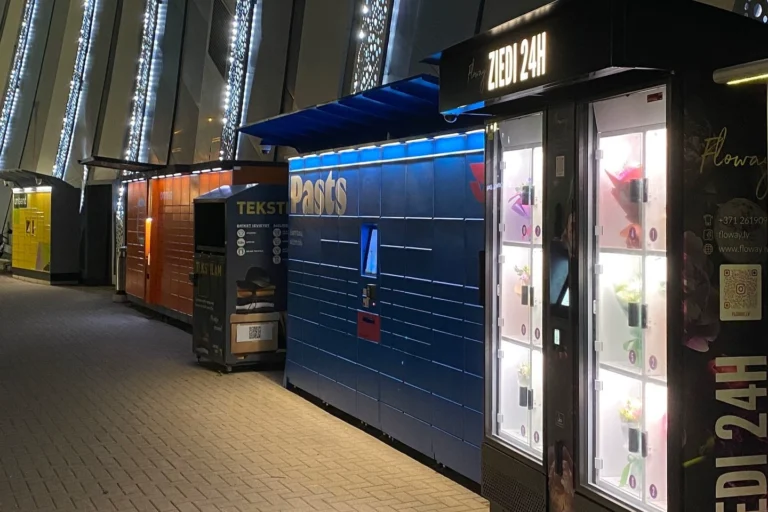
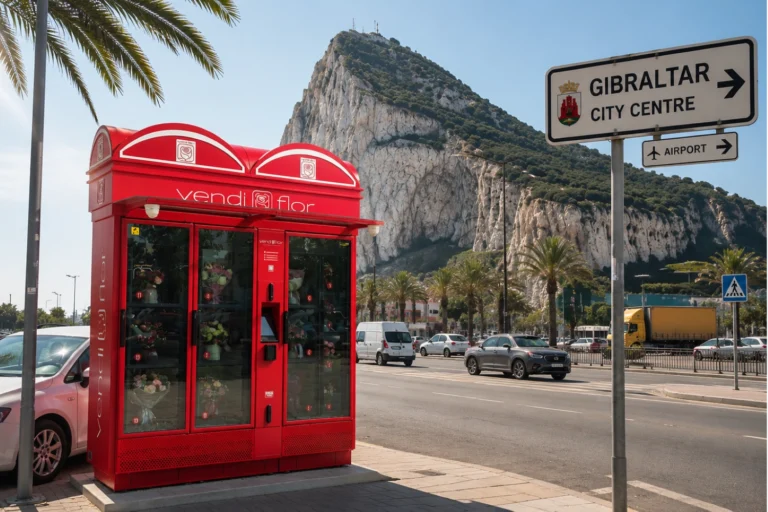
Just a few years ago, automated bouquet sales were still a niche concept in Europe. A flower vending machine was primarily seen as a practical way to sell ready-made bouquets after a flower shop had closed.
Today, the concept has evolved far beyond that.
A modern BouquetMat is becoming part of a much broader retail ecosystem combining the traditional flower shop, e-commerce, technology, data and 24/7 product availability.
The experience of some of Europe’s fastest-growing markets also shows something important: automated flower retail does not have to replace traditional flower shops. Instead, it can help local florists and entrepreneurs expand their reach without opening another fully staffed retail location.
Poland provides an interesting case study of this transformation. Five or six years ago, flower vending machines were still considered a novelty. Today, we estimate that approximately 1,500 machines are operating across the country.
The question is no longer whether customers are willing to buy flowers from a machine.
The more interesting question is:
What happens when automated flower retail becomes a fully integrated part of a florist’s business model?
From a vending machine to a new sales channel
The first generation of flower vending machines addressed a relatively simple problem:
How can a florist continue selling bouquets when the flower shop is closed?
Today, the question is much broader:
How can a local flower business make its products available whenever and wherever customers need them?
This represents a fundamental change in the way we think about automated flower retail.
A BouquetMat is no longer simply a standalone machine. It can become another sales channel alongside the traditional flower shop, e-commerce, telephone orders and home delivery.
A customer may discover a bouquet online, reserve or purchase it and collect it from a BouquetMat at a convenient time.
Another customer may simply see the machine on the way home, choose from the bouquets displayed inside and complete the purchase within seconds.
For customers, this means convenience and availability.
For florists, it means the opportunity to sell 24 hours a day, seven days a week.
Poland: a real-world laboratory for automated flower retail
Poland offers a particularly interesting example of how quickly consumers can adopt a new way of buying flowers.
We currently estimate that approximately 1,500 flower vending machines are operating in the country.
Based on average sales of around 120–160 bouquets per machine per month, at an average retail price of approximately PLN 140–160, this represents an estimated 2.2–2.9 million bouquets sold annually through this channel.
The estimated retail value of these sales could therefore be approximately PLN 300–460 million per year.
These figures are industry estimates rather than official statistics, as Poland has no central register covering either the number of flower vending machines or their sales. Nevertheless, the scale clearly demonstrates that automated flower retail is no longer a technological experiment.
It has become a significant new sales channel.
What makes the Polish example particularly interesting is that this market has not primarily been built by one centrally managed national chain.
Its growth has largely been driven by local florists and entrepreneurs using technology to develop their own businesses.
Technology does not replace the florist
Automation is often associated with replacing people.
In floristry, the relationship is different.
A BouquetMat does not design a bouquet.
It does not select the flowers.
It does not create the composition.
And it does not build the relationship between a local flower business and its customers.
All of this still depends on people.
The florist remains responsible for creativity, product quality, freshness, assortment and brand identity.
Technology automates a different part of the process. It presents the finished product, processes the payment and makes the bouquet available to the customer outside traditional opening hours.
That is why we do not see the future of flower retail as a competition between people and machines.
We see it as a partnership between florists and technology.
One flower shop can serve multiple sales locations
This leads to one of the most important changes in the flower shop business model.
Traditionally, expanding a flower business often meant opening another shop.
That required another retail unit, additional equipment, more staff and another set of fixed operating costs.
Automated retail allows entrepreneurs to think about growth differently.
A single flower shop or floral studio can prepare bouquets for several sales locations across a city. At a more advanced stage, one production hub can supply a local network of several or even a dozen BouquetMats.
The flower shop or floral studio remains at the centre of the operation.
What changes is the distribution model.
Instead of duplicating the entire infrastructure of a traditional flower shop, the entrepreneur can extend the geographical reach of the business through strategically located automated points of sale.
This is one of the reasons why we believe the future of flower retail will increasingly be based on local networks rather than individual machines.
Data is becoming as important as location
One of the first questions every investor asks is:
Where should I install my BouquetMat?
Location remains critically important.
But as the business grows, another question becomes equally interesting:
What can we learn from the data generated by every transaction?
Modern software can provide information about transaction times, sales values, product turnover, price preferences, seasonality and differences between individual locations.
This gives florists something that traditional flower retail has often lacked: a detailed picture of actual customer behaviour.
Instead of relying entirely on intuition, the entrepreneur can begin making decisions based on real sales patterns.
Which price points work best at a particular location?
What time of day generates the highest sales?
Which products sell fastest?
When should inventory be increased?
How does a residential location differ from a transport hub or retail park?
With a single machine, these insights are useful.
With a network of machines, they can become one of the most valuable management tools in the business.
From monitoring sales to actively managing them
The next stage is not simply collecting data.
It is using that data to manage sales.
A bouquet does not necessarily need to remain at the same price from the moment it enters the machine until the moment it is sold.
The system can support promotions, price adjustments and other actions designed to improve product turnover.
This is particularly important in floristry because we are dealing with a fresh, time-sensitive product.
Unlike many categories sold through vending systems, the commercial value of flowers changes over time.
Information about how long a bouquet has been available, combined with historical sales patterns and current demand, can therefore help entrepreneurs make better pricing and replenishment decisions.
In the future, this may become one of the most important areas in which technology can help florists reduce waste while protecting margins.
E-commerce and automated retail are converging
Another boundary is gradually disappearing: the distinction between online and automated sales.
Customers should not have to think in terms of separate channels.
They simply want to buy flowers in the way that is most convenient at that particular moment.
A customer may purchase or reserve a bouquet online and collect it later from a BouquetMat.
Another may discover the florist online but make the final purchase directly from the machine.
A third may first encounter the florist’s brand through a BouquetMat and later order a wedding bouquet, floral decoration or personalised arrangement directly from the flower shop.
From the entrepreneur’s perspective, this represents a shift from several independent sales channels towards a single ecosystem:
Flower shop + e-commerce + BouquetMat + delivery.
This is where automated flower retail becomes part of a genuine omnichannel strategy rather than simply an additional piece of equipment.
The best location is not always the busiest location
Technology does not change one of the oldest principles of retail: the product still needs to be where the customer needs it.
But that does not necessarily mean choosing the location with the highest pedestrian traffic.
Flowers are a very specific purchase.
Customers are often travelling somewhere when they decide to buy them. They may be returning from work, visiting family, going to dinner, travelling to a celebration, visiting someone in hospital or collecting someone from a railway station or airport.
This makes purchase context extremely important.
Successful locations can include areas near flower shops, supermarkets and retail parks, petrol stations, hospitals, large residential developments, major commuter routes, railway and bus stations and airports.
Visibility matters.
Accessibility matters.
The ability to stop conveniently for two or three minutes matters.
And above all, the location needs to fit naturally into the customer’s journey.
In automated flower retail, the highest traffic does not always produce the highest sales.
Is a BouquetMat competition for traditional flower shops?
The answer depends on perspective.
For a florist who incorporates a BouquetMat into their own sales strategy, it is another distribution channel.
From the perspective of the wider market, however, every new sales channel can become a competitive advantage for the businesses that learn how to use it effectively.
A customer who wants flowers at 10 p.m. on a Sunday now has an option that may not have existed a few years ago.
If one local florist provides that option and another does not, the competitive landscape naturally changes.
The real competition, therefore, is not between a flower shop and a machine.
It is increasingly between different business models.
The florist who successfully combines craftsmanship, brand, customer relationships, e-commerce and automated retail may be able to serve customers in situations where a traditional single-channel business cannot.
Built in Poland, developed for international markets
The development of BouquetMat is based on close cooperation between technology and the flower industry.
Eldrut Automatics, as the manufacturer, is responsible for machine engineering, production and the continued development of hardware, climate-control solutions, software and other technologies.
Wsparcie Florystów, as the distribution and business-development partner, contributes practical experience from the flower industry, market development, investor support and knowledge gained from implementing automated retail within real floristry businesses.
This cooperation is important because successful automated flower retail requires more than building a machine.
It requires understanding flowers.
It requires understanding florists.
And it requires understanding how customers actually buy bouquets.
BouquetMat represents the international direction of this cooperation.
Experience gained in Poland – one of Europe’s most developed markets for flower vending machines – is now helping us develop projects in other European countries and beyond.
The objective is not simply to export machines.
It is to develop a scalable automated flower retail model built around local florists and entrepreneurs.
The next step: predictive analytics and AI
Perhaps the most exciting developments are still ahead of us.
As networks grow and more sales data becomes available, the potential value of that information increases dramatically.
Future systems may help predict demand for individual locations and specific days of the week.
They may recommend inventory levels based on historical sales, local events, seasonality or weather.
They may identify optimal price structures, recognise unusual changes in sales patterns and suggest when a promotion should begin.
Artificial intelligence can become another decision-support tool for the florist.
Not to replace experience.
But to make better use of it.
Imagine a local flower business operating eight BouquetMats across a city.
Instead of simply asking, “How many bouquets should we prepare tomorrow?”, the owner could eventually receive a recommendation:
Location A: 18 bouquets.
Location B: 11 bouquets.
Location C: increase the €30–€40 price segment.
Location D: expect higher evening demand.
That is when automated flower retail begins to evolve into something much more sophisticated than vending.
It becomes data-driven flower retail.
The future of flower retail is hybrid
We do not believe that machines will replace flower shops.
We do believe that the definition of a modern flower shop will change.
The flower shop of the future may simultaneously operate as a creative floral studio, a place for personalised customer service, an e-commerce fulfilment centre, a delivery hub and a production centre supplying a local network of automated sales points.
In this model, technology does not reduce the importance of the florist.
It allows the florist’s work to reach more customers.
The winners will not necessarily be the businesses with the largest number of machines.
They will be the businesses that best combine floristry, technology, data, location, brand and customer experience.
Because technology itself does not sell flowers.
People do – through their knowledge, experience, creativity and passion.
The role of technology is to make the result of their work available whenever and wherever a customer wants to say something meaningful with flowers.
FAQ: The Future of Automated Flower Retail
What is a BouquetMat?
A BouquetMat is an automated retail solution designed specifically for the sale and collection of fresh flower bouquets. Modern systems go beyond traditional vending by combining climate-controlled product storage, digital payments, remote management, sales analytics and integration opportunities with online retail.
Can a BouquetMat replace a traditional flower shop?
That is not its primary purpose. We see the strongest potential in a hybrid model where the flower shop or floral studio remains the creative and operational centre of the business, while BouquetMats extend its geographical reach and sales hours.
Can one flower shop operate several BouquetMats?
Yes. In fact, local networks of several machines supplied by one flower shop or central floral studio represent one of the most interesting business models for the future. This allows a florist to expand into additional locations without opening another fully staffed flower shop each time.
Why is sales data important in automated flower retail?
Sales data helps entrepreneurs understand when customers buy, which products and price ranges perform best, how quickly bouquets sell and how demand differs between locations. As a network grows, these insights can improve production planning, replenishment, pricing and inventory management.
Can BouquetMat be integrated with e-commerce?
Yes. The direction of development is towards an omnichannel model in which customers can purchase or reserve bouquets online and collect them from a selected BouquetMat. Automated retail and e-commerce can therefore function as parts of the same customer journey.
What makes a good location for a flower vending machine?
A successful location combines visibility, accessibility and the right purchase context. Retail parks, supermarkets, petrol stations, hospitals, residential areas, commuter routes, railway stations and airports can all work well. High pedestrian traffic alone does not guarantee strong sales; convenient access and alignment with customer journeys are often more important.
Does automated flower retail compete with local florists?
It depends on how the technology is used. For a florist operating a BouquetMat, it is an additional sales channel. At market level, however, any new channel can create a competitive advantage for businesses that adopt it effectively. Our model is designed to strengthen local florists and entrepreneurs rather than replace them with a centrally managed flower retail network.
What role will artificial intelligence play in flower retail?
AI can potentially support demand forecasting, inventory planning, pricing decisions, sales analysis and waste reduction. Its role should be to support the florist’s business decisions with better information – not to replace the creativity and expertise that define professional floristry.
What is the future of flower vending machines?
The future is likely to be less about individual vending machines and more about connected retail networks. Flower shops, e-commerce, delivery services and automated sales points will increasingly operate as one integrated system, supported by data and intelligent software.
That is why we believe the next chapter is not simply about flower vending machines.
It is about building a new generation of automated, omnichannel flower retail.