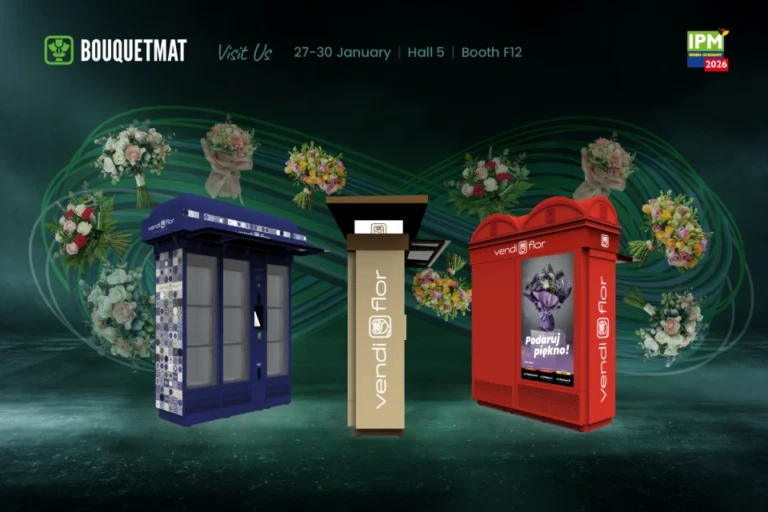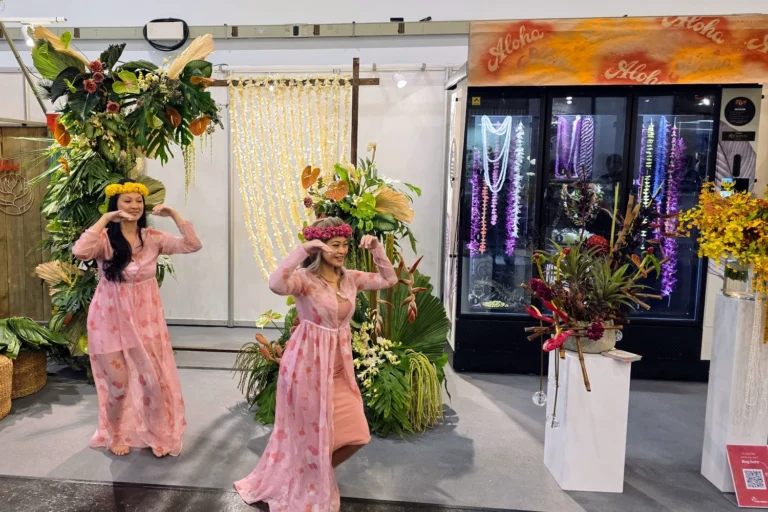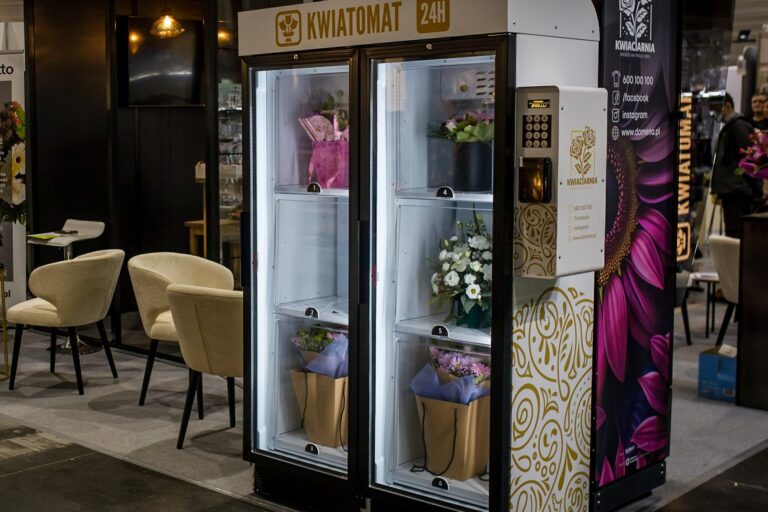
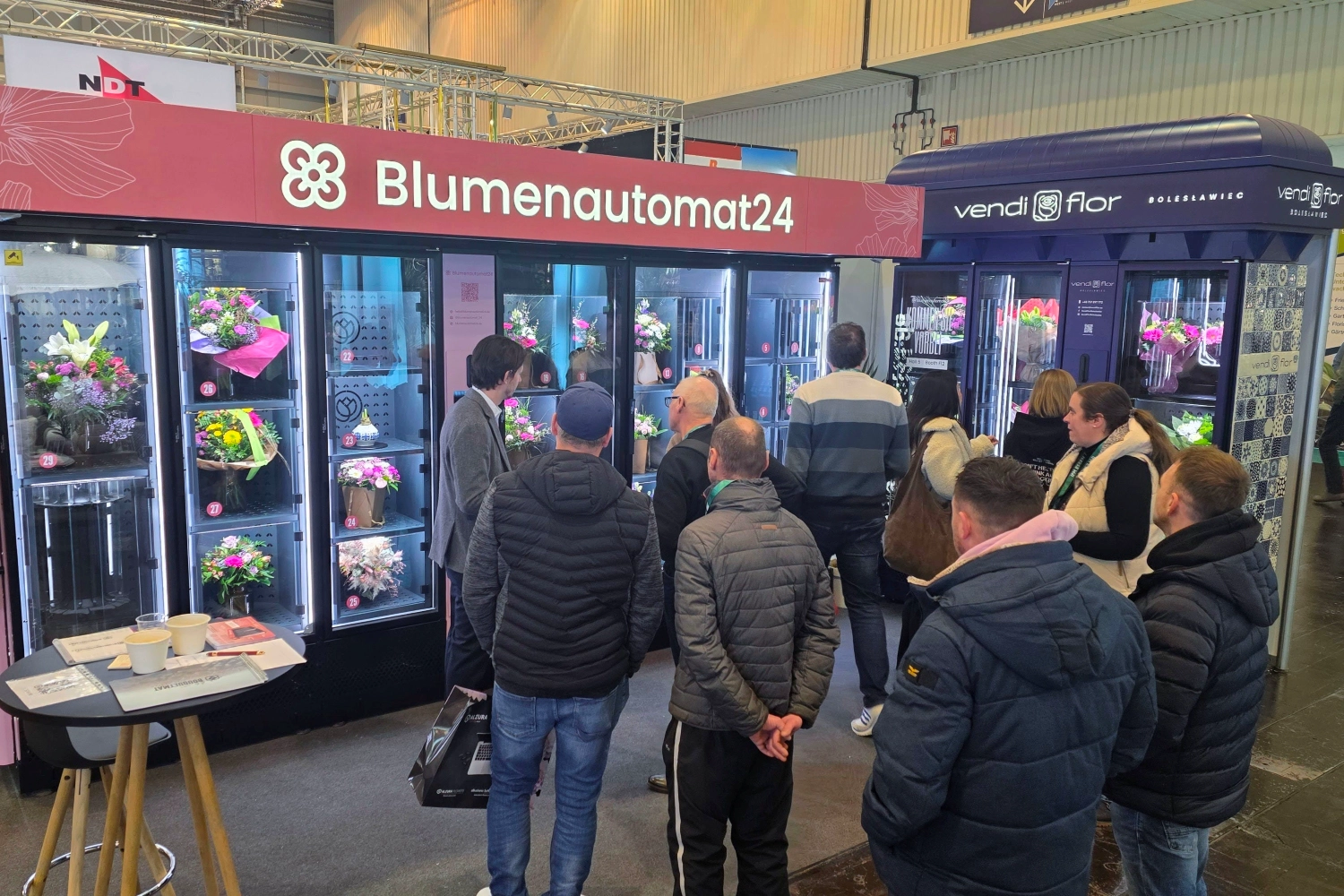
IPM Essen – The Future of Flower Vending Machines in Europe Starts Now
On the product life cycle of flower vending machines, trust, and an opportunity not to be missed
During the trade fair in Essen, while talking with florists from Germany and many other European countries, I experienced a strong sense of déjà vu. It felt as if I had travelled back in time by at least three years — to the moment when flower vending machines, bouquet vending, and automated flower sales were just beginning to emerge in Poland.
The questions were the same.
The doubts were the same.
The concerns about energy costs, profitability, and the purpose of investing in vending machines were exactly the same.
This was not surprising — and precisely because of that, it was so meaningful.
The product life cycle: Poland and Western Europe at different stages of the same journey
When we look at the development of flower vending machines through the lens of the classic product life cycle, the differences between Poland and Western Europe become very clear.
In Poland, flower vending is now in the maturity phase. The market understands the concept, customers accept buying flowers from vending machines, and florists no longer ask “does it work?” — instead, they ask “how can I use it best?”
Sales conversations that once took an hour now take fifteen minutes. Instead of explaining the idea, discussions move straight to specifics: machine size, number of compartments, location, and additional features. The flower vending machine is no longer a novelty — it has become a business tool.
In Germany and much of Western Europe, however, the market is still in the late introduction phase or early growth phase. Skepticism is natural, and questions about costs, energy consumption, and return on investment dominate the conversation.
This is not a weakness. It is simply how every market develops — at its own pace.
Trust does not appear overnight: how it was built in Poland
Market maturity in Poland did not happen by chance. Trust in flower vending machines was built slowly, step by step, and very practically.
Three years ago, Polish florists had exactly the same concerns that we hear today in Western Europe:
– Will the machine take sales away from the flower shop?
– Will customers stop coming inside?
– Will vending lower the quality of bouquets?
– Will the machine be difficult to manage?
A turning point was the “Flower Vending Machine on Trial” initiative.
Instead of promises — real machines.
Instead of presentations — real locations.
Instead of theory — real customers and real sales data.
Florists did not need to believe anyone’s words. They could see daily sales, customer behaviour, seasonality, costs, and revenues for themselves.
What quickly became clear was that:
– the vending machine did not replace the florist — it complemented the shop
– it sold flowers when the shop was closed
– it served customers who were in a hurry, preferred limited interaction, or valued convenience
– it increased bouquet availability in both nearby and more distant locations
This is how trust is built: through evidence, not declarations.
IPM Essen as a mirror of time
For me, Essen was not about discovering a new trend. It was a mirror showing a stage of development that Poland has already passed.
The same concerns about energy.
The same doubts about costs.
The same hesitation about whether “the time is right”.
The difference today is that we already have answers — based on real market experience, not assumptions.
The future of Europe: development or stagnation
This leads to the most important message, especially for florists in Western Europe.
Regardless of differences in market maturity, we all face the same structural challenges:
– shortage of staff
– lack of qualified employees
– rising labour costs
– limited opening hours
These problems will not be solved by nicer shop windows or longer working hours.
The solution is closer than it may seem.
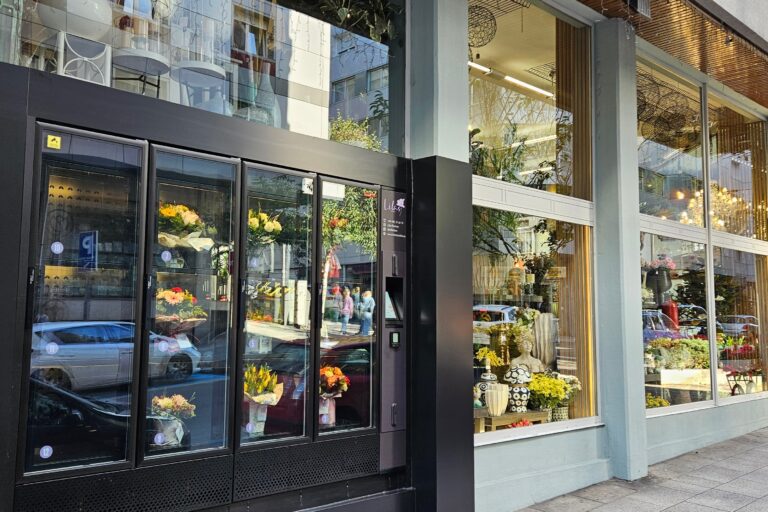
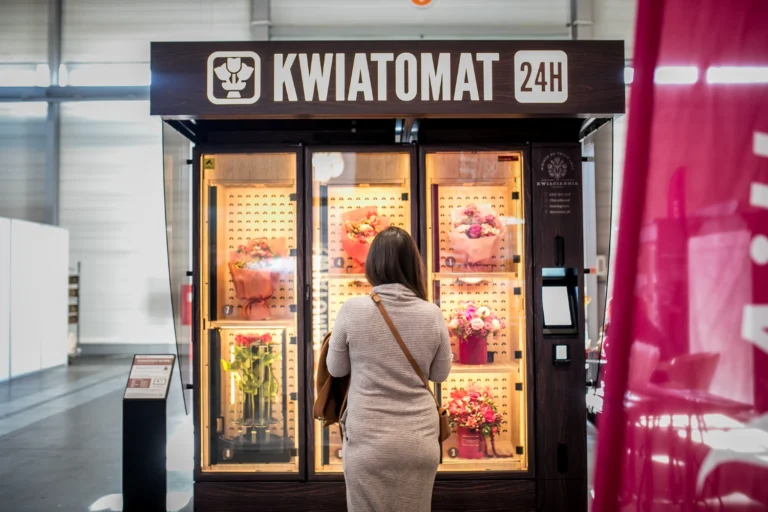
Flower vending machines, bouquet vending, and retail automation are not a threat to flower shops. They are a response to changing customer behaviour:
– customers who do not feel comfortable with direct interaction
– customers who are in a hurry
– customers who value convenience
– customers who want to buy flowers immediately
They also offer a real opportunity to:
– stay ahead of retail chains
– increase sales through greater availability of bouquets
– build a strong local market position before competitors do
Final thought
Poland has already gone through this process.
Not perfectly. Not without mistakes. But successfully.
Those who believed earlier now have a competitive advantage.
Those who waited too long had to catch up.
Western Europe is standing at the same crossroads today.
Those who invest early will build the market.
Those who wait will compete for what remains.
This is not about trends.
It is about decisions.
Let’s talk about the right solution for you
If you are considering flower vending, bouquet vending, or automated retail as a way to support and grow your flower business, feel free to get in touch.
Together, we can choose the best solution for your location, your market, and your business model. There is plenty to choose from in the offer of the Polish manufacturer Eldrut Automatics, with a wide range of flower vending machines and configurations already proven in real market conditions.
📞 +48 576 375 900
✉️ hello@bouquetmat.com
Sometimes one good conversation is enough to see the next step more clearly.
FAQ
Why is IPM Essen important for the flower vending industry?
IPM Essen is one of Europe’s most influential horticultural trade fairs. It sets industry direction, connects international partners, and showcases innovations that shape the future of floristry and retail technology.
What does IPM Essen reveal about the future of flower vending in Europe?
The trade fair highlights growing interest in automation, sustainability, and multi-channel retail models. Flower vending machines are increasingly seen as part of structured retail strategy rather than experimental concepts.
Is flower vending becoming a European trend?
Yes. Across multiple European markets, retailers and florists are exploring automated bouquet sales as a scalable, data-driven extension of traditional flower shops.
Why does participation in IPM Essen matter for investors?
Presence at IPM Essen signals innovation readiness, industry credibility, and long-term commitment to development. It also enables networking with distributors, retail partners, and suppliers essential for European expansion.